The Theatre of the Yellow Rock Fort

A solo exhibition by Kristen McClarty

Long Gallery: 06.08.26 - 17.09.26 

This exhibition will bring together diverse artworks to create a seamless experience of a space, both actual and imagined. A theatre of land centred around a place that I have come across on my regular coastal walks.

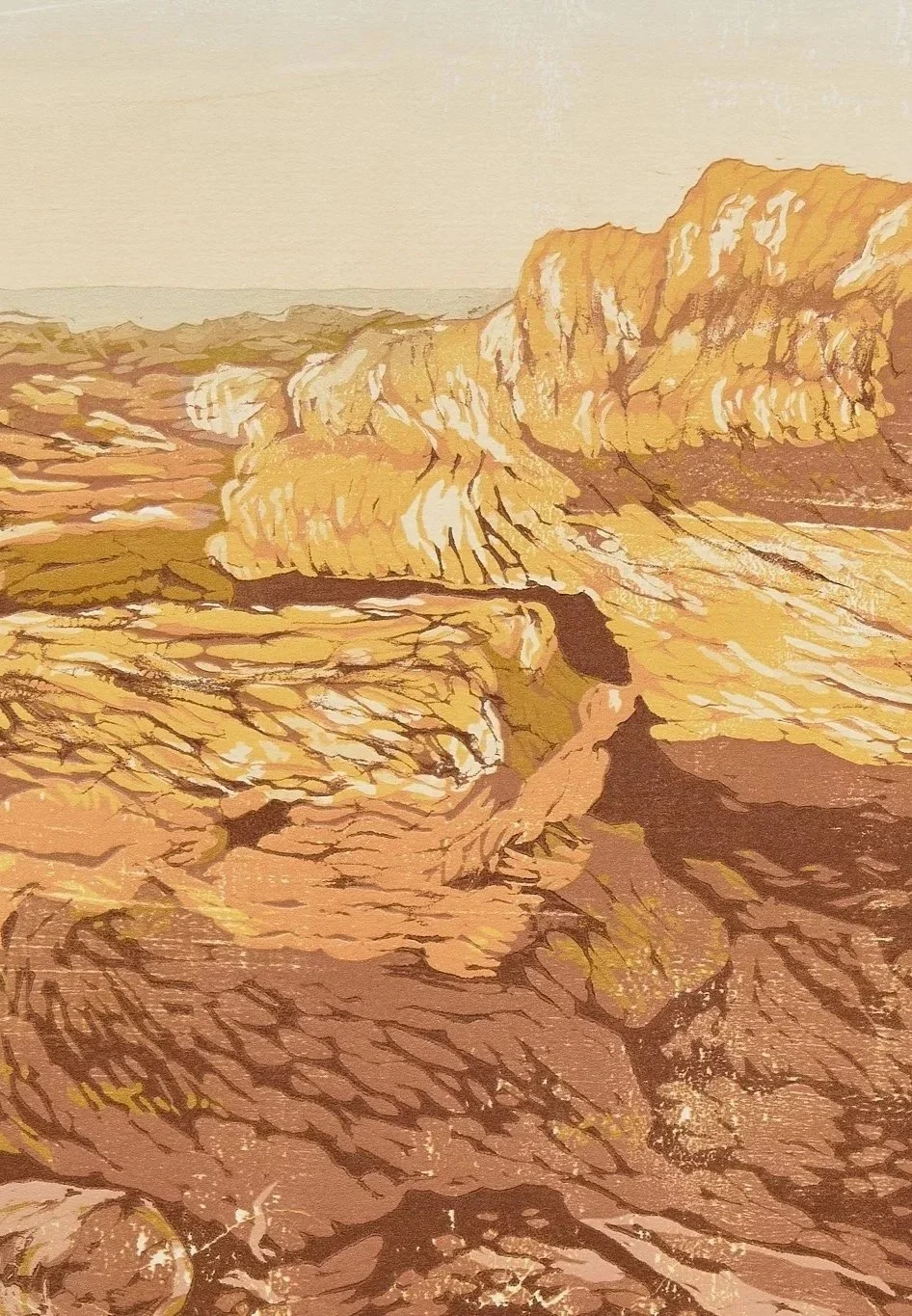
The place is called Bird Island, and it was linked to the mainland by a narrow spit of sand and rock some years ago. Now, one can walk onto and around it, into the teeth of the wind to a place that was not always accessible. Arguably belonging more to the sea than the land. The place is made up of course sand, crushed shell, coastal fauna, and rocks, shaped by the sea and weather into otherworldly figures, and covered in coastal lichen of the richest yellow ochre. A seated dromedary camel or a couple in an almost embrace, forever leaning in for a kiss. A crocodile in repose or a rock that is about to take off in flight.

This is a dynamic place, with shifting sand and debris and sea levels that rise to cover it at times. When the swell is big, it becomes a dull roar in the background, over which the other sounds are layered. The irregular screech of gulls or a plover warns you off her nest. The coastal lichen blankets a strip of the rocks; yellow ochre, which turns chartreuse when the rocks have been covered by sea or drenched in rain. Kelp is brought in by the waves, dumped into the space in clumps of tangled arms and legs. At first slippery and wet, and then hard and brittle as it dries. Crunchy. Or else it gets stuck in stagnant salty pools where it ferments, to make a seaside brew that attracts the sea lice. Which in turn brings the sacred ibis in for a feed. The air is rich and heavy with the smell of organic matter and salt and rot.

Here, one larger rock rests on the others, forming a small shelter or cave, a refuge from the buffeting wind, waves, and sea spray. It is covered in lichen, yellow and white, and its underbelly, shaded and protected from the sun, is a minky pink, womblike with smooth curves. Into this space comes a human to walk, explore, and play. The human looks like me. She cannot see herself as she walks. But she can see her shadow and her shadow plays, reaching over and around the rocks, part human and part animal, insect, or some other thing.

One day I walked around Bird Island to find that somebody had built up the sides of the overhanging rock shelter with dried kelp and the roots and dead branches of coastal blombos. The shelter was transformed into a fort, a small space to huddle, protecting the inhabitants from the outside world. A place to play.

The transformation of the shelter from wildly natural to a recognisable place of play was significant. It was not difficult to recognise the dramatic potential of the space. The possibility of a story. I started to take video footage and assemble artefacts from the area, real and imagined archaeological finds, which I researched and pursued. Always collecting and slowly building up a narrative recording the human touch on this space, my own imprint on the place and the imprint of the place on me. An ancient dialogue in the forgotten language of the landscape. I called the shelter, the Yellow Rock Fort.

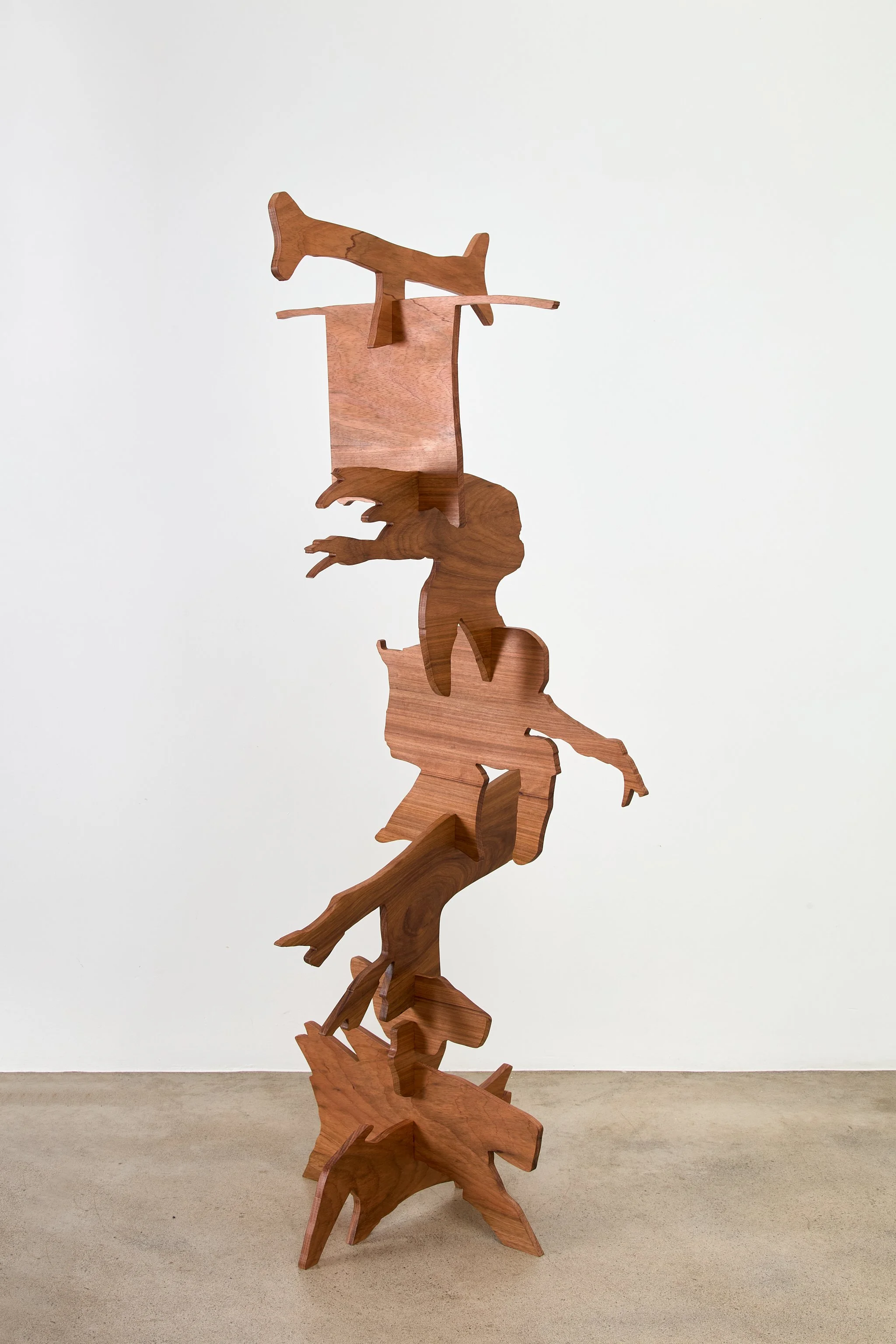
I have used the Yellow Rock Fort as a starting point for a body of work that is playful, ritualistic, and rich in symbols and marks that evidence my own dialogue with the land. I have used materials and processes that bear the hand of the maker. As the starting point, I made a short video where the sole actor is my own shadow on the rocks, coming into the place and giving over to it. From that material, I have made drawings that have morphed into small carved sculptures, and then bigger ones. I have made sculptures of my own shadow, which themselves cast a shadow, installations of my collections, shrines to the land, and an engagement of the senses. All with a deep feeling of play. These things come together in an exhibition titled The Theatre of the Yellow Rock Fort.

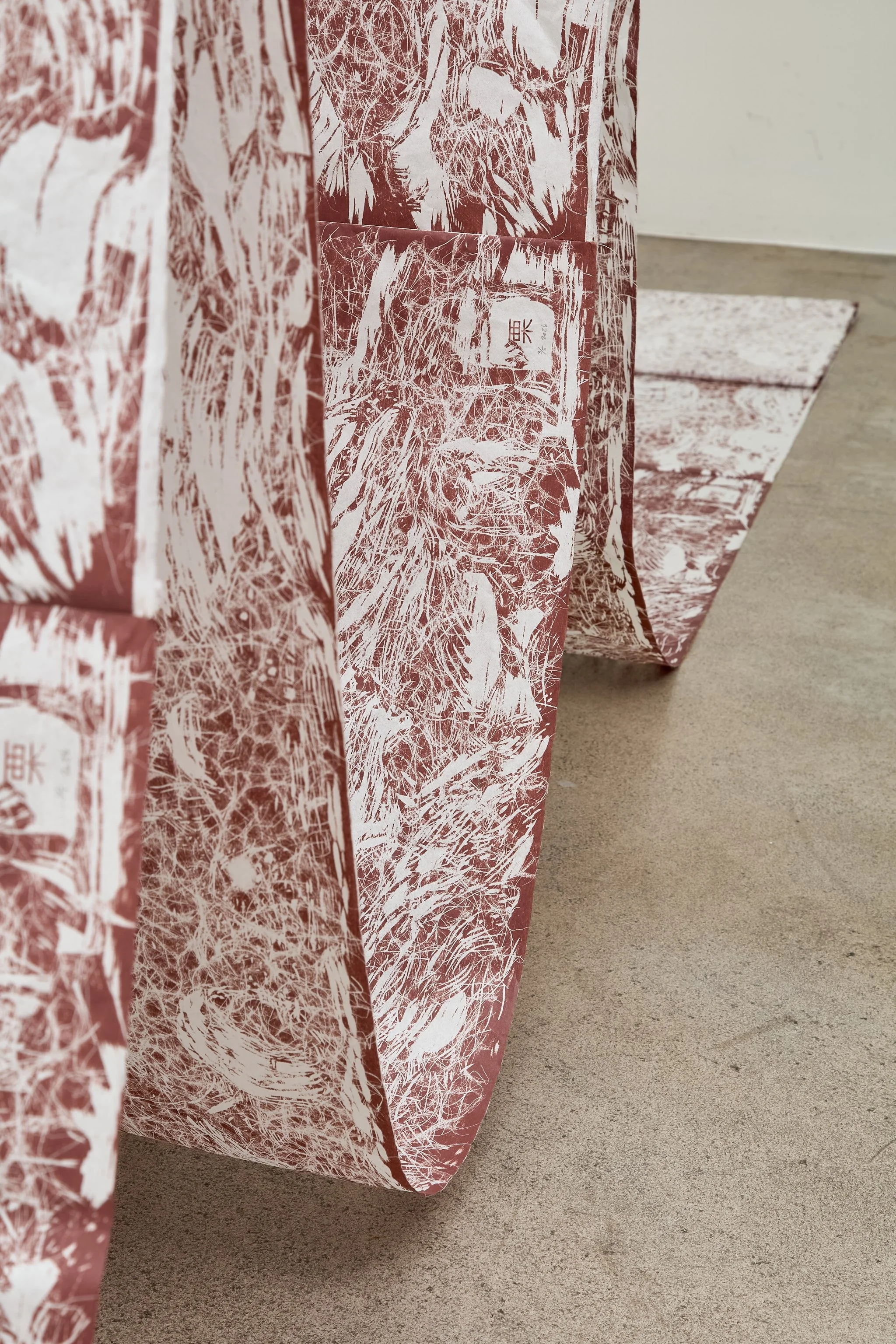
The exhibition includes carved handheld wooden shadow throwers, traditional woodcut, frottage, a stacked totem-like vertical story, an installation of a perpetual woodcut and shadow projections. It is an assemblage of elements that are usually obscured by eyes trained to read the modern world of manufactured things and hard edges. I include representative woodcuts that contextualise the space and facilitate a movement away from the visible landscape. They allow a journey to a place of myths, iconographic symbols, and unrecognisable forms, in the forgotten language of the land. The pieces are animistic, poking at the idea of human dominion over land, and disturbing the established organisation of space. These works come together as an experiential tableau of an actual space and imagined land. A multisensory theatre of installation, movement, shadow, and play. The ritualistic and repetitive collection of artefacts evidences my own dialogue with the Yellow Rock Fort and the fact of my having been there. The exhibition becomes an evolving play that is never finished, referencing time, space, and story.

Coming into the exhibition, the audience will feel as if they have walked onto the stage during a performance that is already long underway. Walking through the works, they will have the opportunity to engage with and extend the ongoing dialogue with land, by themselves becoming living actors in the theatre, casting their own shadows, and disturbing the space with their presence and play. Just as others have done over thousands of years.

I expect that I am drawn to this wild space, the Yellow Rock Fort, because it eschews the pastoral landscape and all that it symbolises: societal, political and the pervading blanket of colonisation. It pursues a different context. In this exhibition, the voice of the human or narrator is subverted so that the landscape can speak. Through ritual and play, an ordinary place is transmuted into a sacred one, rich with complex language. 

Previous
Previous

Next
Next